US Air Force Training Management
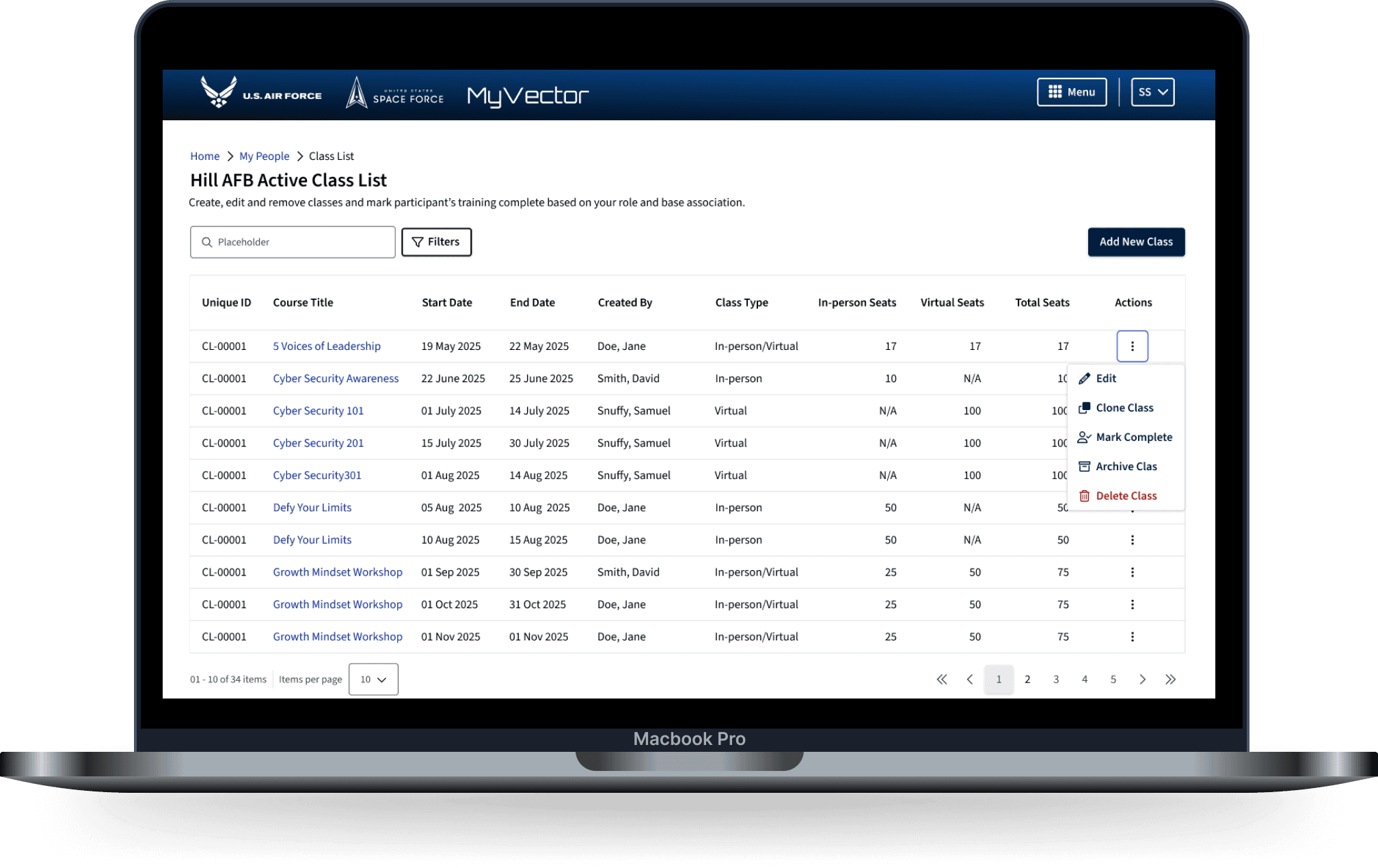
The Education and Training Management System (ETMS) streamlines training mandates and keeps Airmen and Guardians on track with their career development while remaining mission-ready.
Role
Deliverables
Lead UX/UI Designer
User Centered Design Event Coordinator
User Centered Design Event
Customer Requirements - Backlog
User Journey Map
Wireframe Designs
Usability Testing and reports
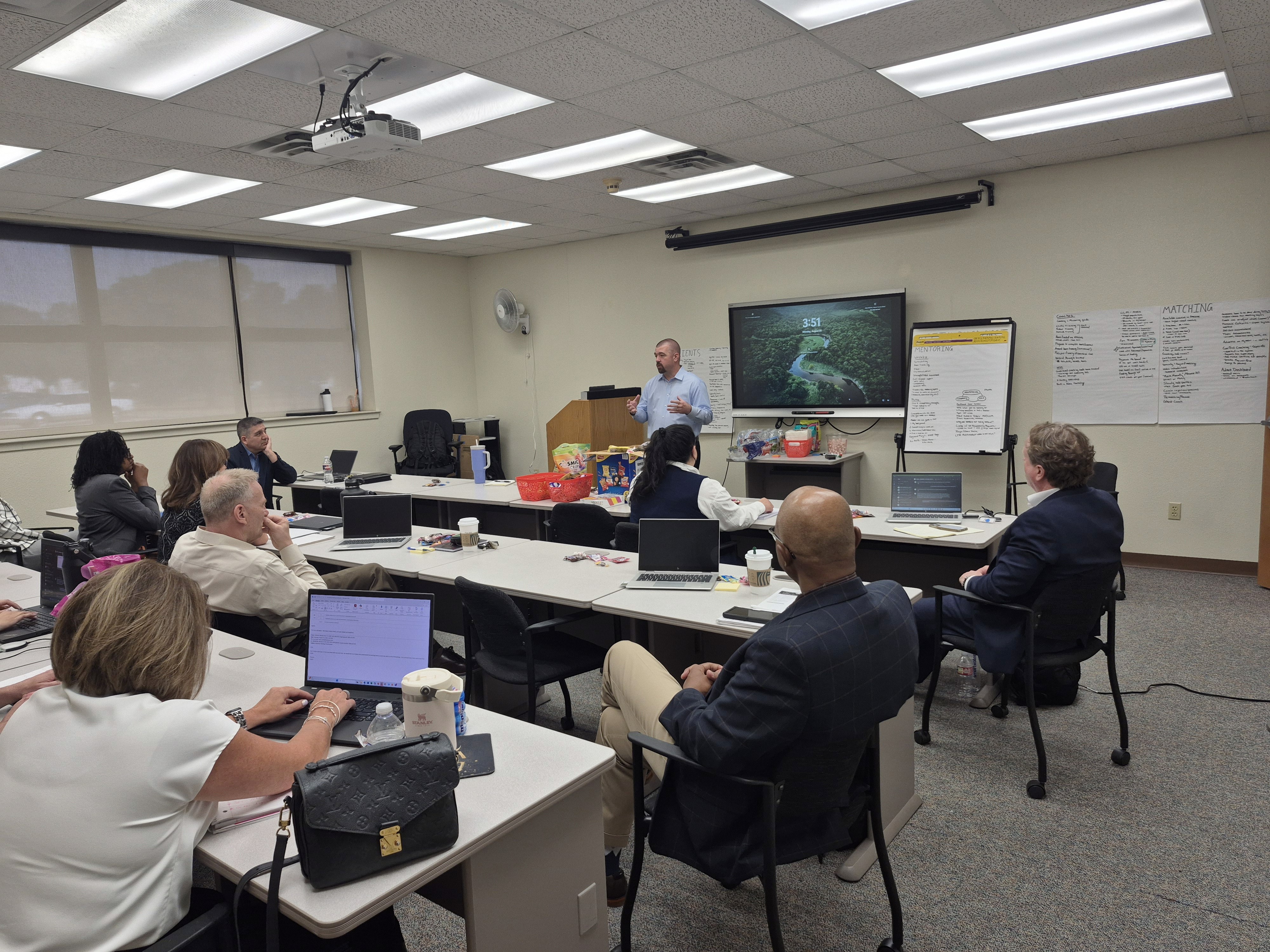
We conducted a 5-day User Centered Design event with our stakeholder to gather requirements, journey mapping and sketching wireframes .
Outcomes
We learned the current system being used had a variety of concerns from UX/UI to data integrity and were tasked with creating a more usable and wholistic tool that could be built in the MyVector platform.
Concerns
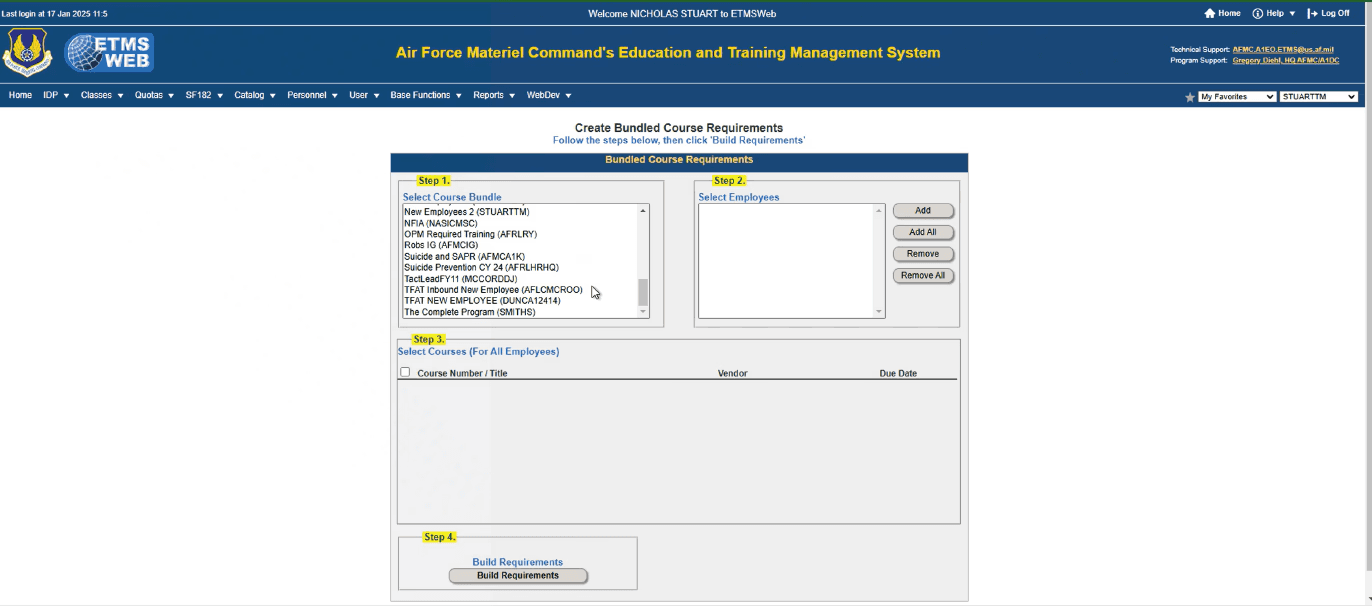
Software over 20 Years old
TRaining and Personnel records not connected
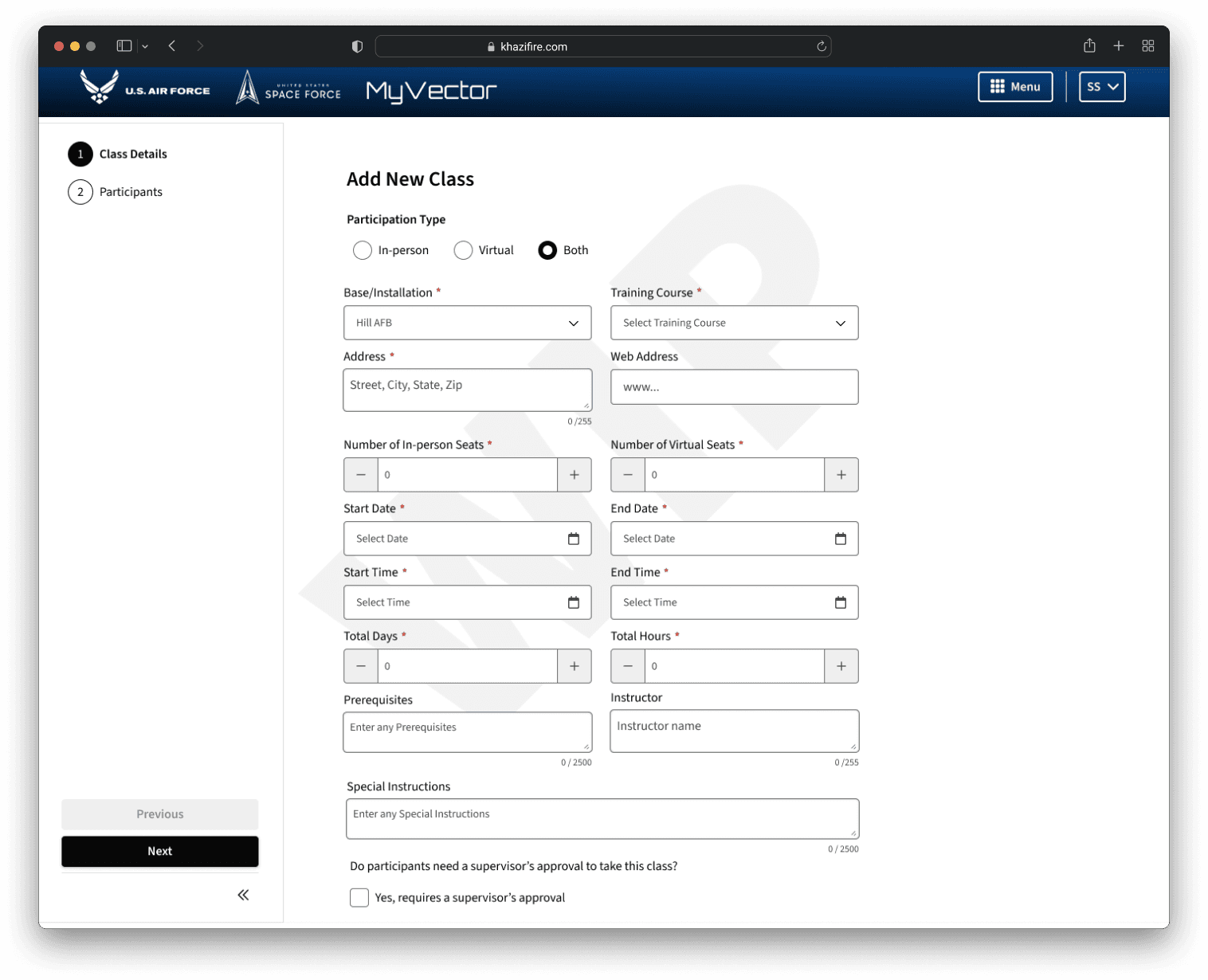
Non-Intuitive class creation process
High maintenance costs
User Roles, Required Functionality and User Mapping

Functionality for base and admin user roles
Unit Training Managers, Employment Development Specialists:
Create/Import Course for the Course Catalog
Create In-Person and Virtual classes
Create or import a class roster
Create and submit training funding form
Assign training to Airmen and Guardians
Mark training complete for Airmen and Guardians
Airmen and Guardians:
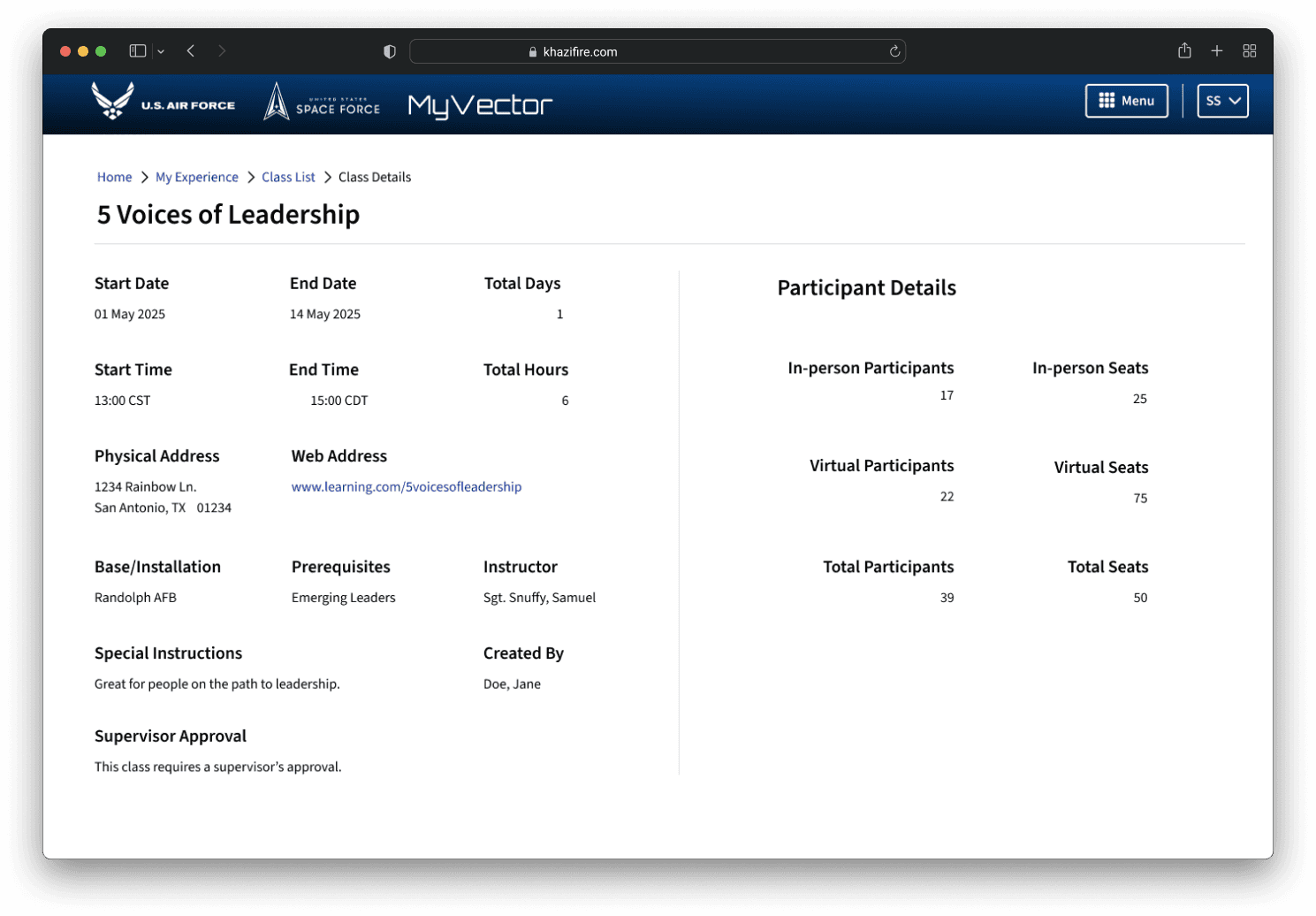
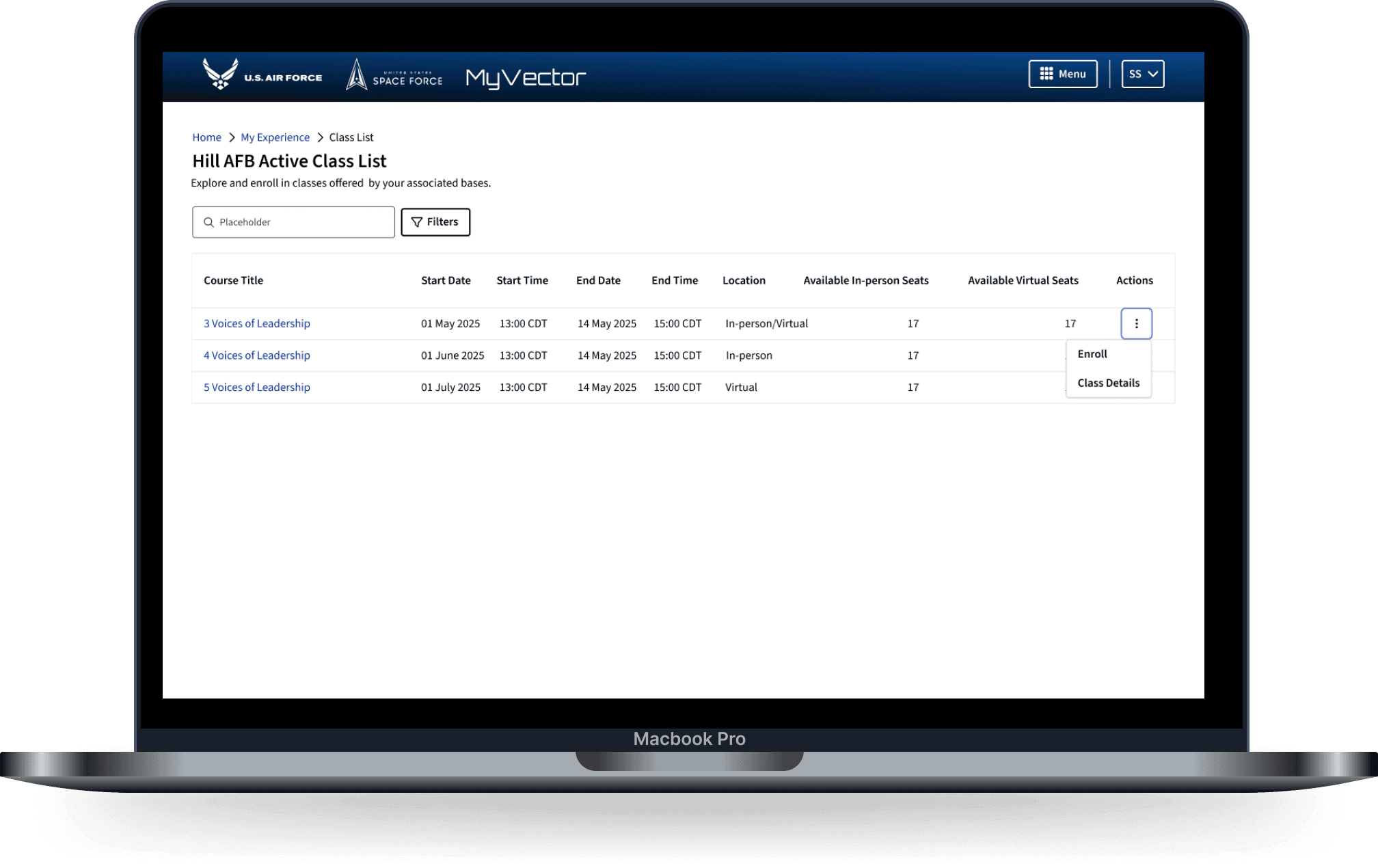
View assigned training and class details
Fill and submit training funding request form
Submit training to be marked complete if necessary
View personal and updated training record
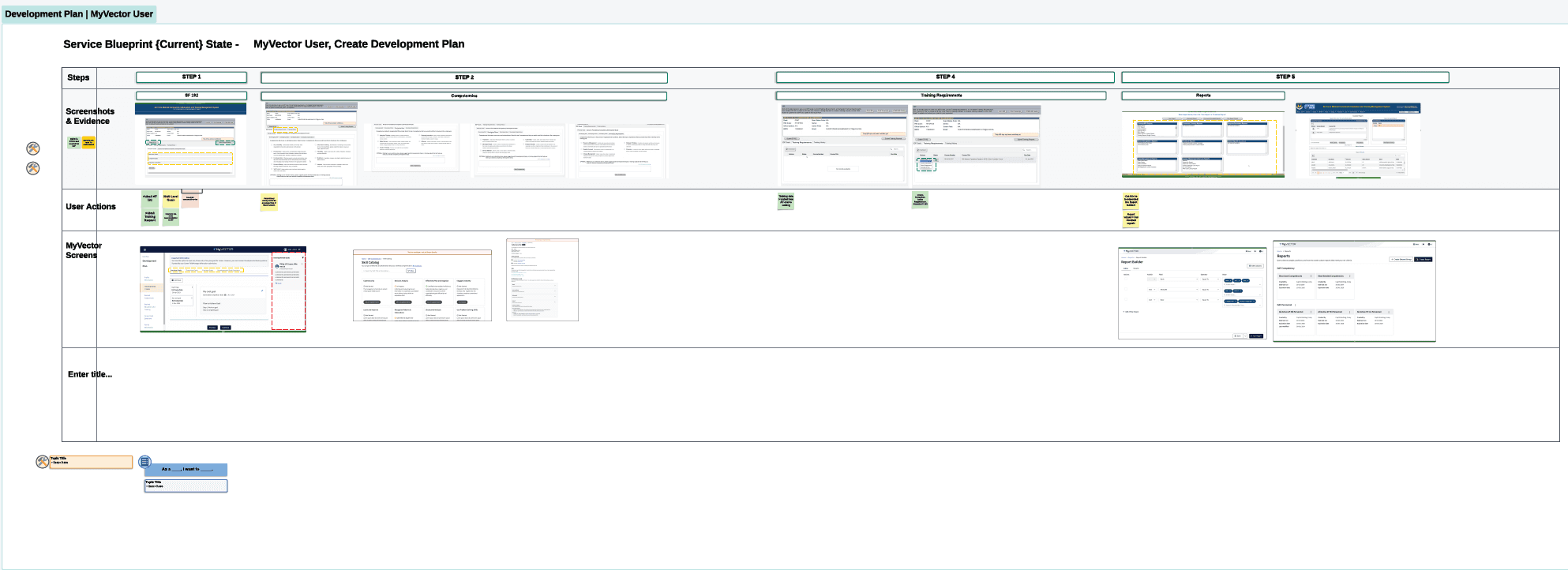
Prototyping and User Testing
Monthly testing Sessions
Testing prototypes/designs and implemented functionality
Up to 25 testers per session
Pass/Fail and written feedback through forms
Feedback reviewed for Product Decisions
Conclusions and takeaways